
Top 5 Safer Ways Businesses Can Utilize LLMs
Introduction
After our in-depth exploration of the limitations of Large Language Models (LLMs), it’s time to shift our focus to the brighter side. At EmbeddedLayers, we are excited to launch a five-part series dedicated to how businesses can start utilizing LLMs today. This series will delve into various domains where the true strengths of LLMs can shine, showcasing their potential as powerful tools in the business landscape.
We recognize that while technology is a formidable force, the heart and soul of every business lie in its people – the decision-makers, the innovators, and the teams who bring passion and care to their work. This series aims to illuminate how LLMs can support and enhance human efforts, not replace them. Each installment will focus on a distinct area, demonstrating how LLMs can be strategically employed to optimize operations, foster innovation, and drive growth, all while ensuring that the critical tasks and decisions remain in the capable hands of those who care deeply about their business and its success.
By embracing the capabilities of LLMs, businesses can unlock new levels of efficiency and creativity. However, it’s crucial to approach this integration with a clear understanding of both the AI’s capabilities and its limitations. Our goal through this series is to provide that clarity, equipping businesses with the knowledge and insights to effectively leverage LLMs in a way that complements their human talent and expertise.
Join us as we embark on this journey, exploring the synergies between AI technology and human ingenuity, and uncovering the myriad ways in which LLMs can be a valuable asset to businesses in the contemporary digital landscape.

Summarization: Streamlining Information with AI
In the dynamic and data-driven world of business, the ability to efficiently manage and interpret large volumes of information is crucial. This is where Large Language Models (LLMs) like ChatGPT demonstrate their prowess, particularly in the field of data summarization. These advanced AI models are adept at analyzing and condensing extensive textual data, from comprehensive market research to extensive customer feedback. The key lies in their ability to process this information rapidly, creating summaries that are not only succinct but also maintain the essential details critical for informed decision-making. For small and medium-sized enterprises (SMEs), this capability is a game-changer, offering a streamlined approach to tackle information overload and tailor summaries to specific business needs.
But the true innovation lies deeper. The standardization provided by LLMs in data summarization is a stepping stone to more advanced and transformative applications. This uniformity in data processing is essential, as it allows for more uniform vector representation of the data. If you’re unfamiliar with this concept, don’t worry – we plan to delve into it in another series. In essence, this standardization helps capture the essence of information more effectively, facilitating the connection of data points that might otherwise remain obscured. Consider, for instance, the challenge of comparing two articles, one written in English and the other in Italian or, more complexly, Latin. Without standardization, comparing these documents is an arduous task. However, by converting them into a single language – standardizing a critical component – they become seamlessly interminglable. This is just a glimpse of how LLMs’ standardization of data summaries not only simplifies the immediate task at hand but also sets the stage for deeper, more insightful analyses and connections within data, unlocking new horizons for business innovation. Stay tuned as we explore this fascinating aspect further in our upcoming series, where we’ll take a deep dive into the world of vector representations and their implications for business intelligence.

Brainstorming with Iterative Scenario Guidance: Sparking Innovation with AI
Brainstorming with Large Language Models (LLMs) is not just a transformative tool for businesses as a whole, but it also offers a unique advantage on an individual level. This aspect of LLMs opens up avenues for personal brainstorming, providing a kind of selective sounding board for employees to explore and refine their ideas independently. Such a feature is particularly beneficial in today’s diverse work environments, where ideas can originate from any level within an organization. With LLMs, employees have the freedom to engage with an AI partner at any time, allowing them to develop and polish their thoughts before bringing them to a larger group. This process is especially valuable for introverted team members, who often have brilliant ideas but might hesitate to voice them in a group setting.
LLMs can be seen as champions for the introverts in the workplace, empowering those who may not be as vocal in traditional brainstorming sessions. These AI models provide a safe and non-judgmental space for individuals to articulate and develop their ideas without the pressure of immediate feedback or scrutiny. By interacting with an LLM, introverted employees can gain confidence in their ideas, refining and expanding them to a point where they feel ready to share with the team. This not only boosts their confidence but also ensures that valuable insights and perspectives are not lost due to communication barriers. In a way, LLMs could be seen as heralding the rise of introverts in the corporate world, unlocking a treasure trove of insights and ideas that might otherwise remain unspoken. This individual-level brainstorming with LLMs is a significant step towards more inclusive and comprehensive idea-generation processes within businesses, fostering a culture where every voice, regardless of its volume, is heard and valued.

Drafting and Refinement: Collaborating with AI for Perfect Outputs
The collaboration between humans and Large Language Models (LLMs) in the drafting and refinement of content is a paradigm shift for small and medium-sized enterprises (SMEs). In this process, LLMs take the lead in creating initial drafts for various content types, such as emails, reports, project plans, and marketing materials. This step is where the efficiency of AI really shines. LLMs quickly assemble a basic structure or wireframe of the content, laying down the essential elements and ideas. This initial draft, while rough, provides a solid foundation, saving significant time and effort that would otherwise be spent on starting from scratch. For SMEs, this means the ability to generate content rapidly, keeping pace with the demands of the modern business landscape.
The second phase of this process involves human intervention, which is vital in transforming the AI-generated draft into a piece that truly resonates with its intended audience. This is where personalization comes into play. Human expertise adds depth, nuance, and a personal touch to the content, aligning it with the unique voice and style of the business. This collaborative effort ensures that the content not only conveys the right message but does so in a way that is authentic and engaging. Once refined by a human, the content returns to the AI for a final polish. This step ensures the elimination of any grammatical errors and fine-tunes the language to professional standards. The result is content that is not just quickly produced but is of high quality and tailored to the specific needs and brand of the business. Through this symbiotic process, SMEs can efficiently produce content that stands out, enhancing their market presence and communication effectiveness.

Information Retrieval: Personalizing AI for Targeted Data Insights
In the digital age, where data is a key driver of business decisions, the ability to quickly and accurately access relevant information is crucial. Large Language Models (LLMs) present a significant advancement in this arena, especially when tailored to a business’s specific data needs. This personalization of LLMs transforms them into powerful tools for information retrieval, capable of sifting through vast datasets to pinpoint exactly what is required. Unlike generic search tools, personalized LLMs adapt to the unique contexts and requirements of a business, learning from each interaction to enhance the relevance and precision of their search results. This is particularly valuable for small and medium-sized enterprises (SMEs), where efficient access to targeted information can significantly impact decision-making processes.
The democratization of advanced data handling through LLMs levels the playing field for SMEs. These businesses can now harness the same power of data insights that larger corporations have long utilized, but without the need for extensive resources or specialized expertise. LLMs offer a user-friendly interface through which SMEs can query their data, receiving context-driven insights and analyses. This capability not only enhances the speed of information retrieval but also ensures that the data provided is actionable and directly applicable to the business’s specific scenarios. In an environment where responsiveness and agility are key to success, the ability of LLMs to facilitate quick, informed decisions becomes an invaluable asset for SMEs, enabling them to react swiftly to market trends, customer needs, and operational challenges.
Training Assistance: Customizing Learning with AI
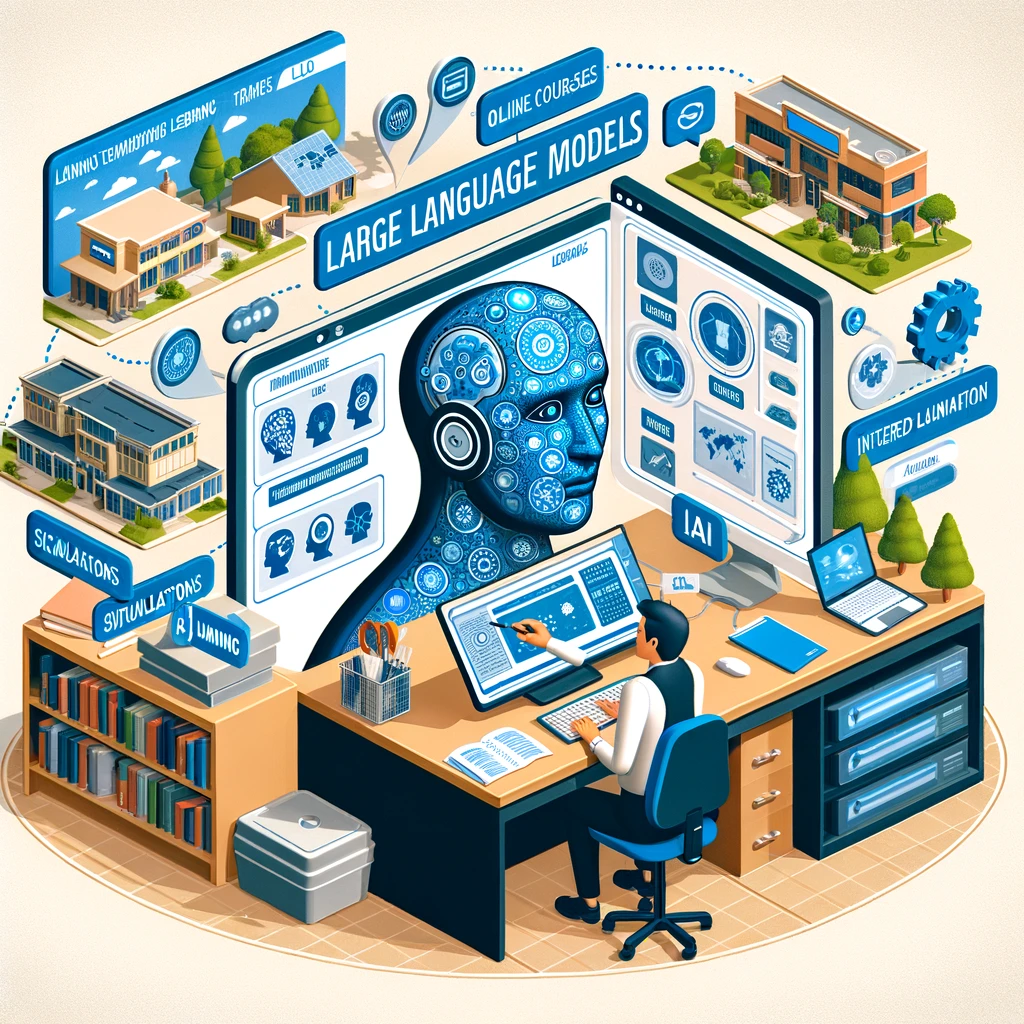
For small and medium-sized enterprises (SMEs), the development of tailored and effective training materials is often a challenging and resource-intensive endeavor. This is where Large Language Models (LLMs) step in as invaluable allies. LLMs provide practical assistance in the creation of training content that is not only engaging but also deeply relevant to the specific needs of a business. With their advanced capabilities, LLMs can assist in the development of a wide range of training formats, including interactive online courses, simulations, and scenario-based learning modules. These AI-powered tools have the ability to adapt content to suit the learning objectives of the company, ensuring that the training is directly aligned with the company’s goals, culture, and operational requirements.
The integration of LLMs in training development brings a cost-effective solution to the often expensive process of creating high-quality educational materials. SMEs can leverage these AI tools to produce training content that rivals that of larger corporations, without the hefty investment typically associated with such endeavors. Moreover, LLMs enable continuous learning and adaptability in training programs. As industries evolve and new trends emerge, LLMs can quickly update training content, keeping it current and relevant. This dynamic approach to training ensures that employees are always up-to-date with the latest knowledge and skills, fostering a workforce that is adaptable, skilled, and ready to meet the ever-changing demands of the business world. In this way, LLMs not only streamline the process of training material development but also enhance the overall quality and effectiveness of learning within SMEs.
Conclusion
Large Language Models (LLMs) present a diverse array of applications that, when harnessed with strategic insight and intention, can offer significant benefits to SMEs. These tools are more than just technological advancements; they are powerful allies that can augment human expertise and creativity. From streamlining information processing and facilitating innovative brainstorming to assisting in drafting and refining content, personalizing information retrieval, and enhancing training programs, LLMs have the potential to revolutionize various aspects of business operations.
At EmbeddedLayers, our commitment lies in guiding businesses through the evolving landscape of AI technologies like LLMs. We aim to ensure that these tools are utilized in a manner that is not only safe and effective but also optimally conducive to business growth and success. Understanding and leveraging the capabilities of LLMs can open doors to new efficiencies, insights, and innovations, all of which are crucial in the competitive world of business.
As part of our dedication to this mission, we are excited to announce a five-part series that will delve deeper into each of the topics discussed: Summarization, Brainstorming with Iterative Scenario Guidance, Drafting and Refinement, Information Retrieval, and Training Assistance. This series will provide a more comprehensive exploration of how LLMs can be applied in these key areas, offering practical insights and strategies for businesses.
These topics are not just areas of exploration but are starting points for businesses to begin thinking about how to integrate LLMs into their operations in a manner that is both safe and effective. Stay tuned for our series, where we will unpack these concepts further, providing you with the knowledge and tools to harness the power of LLMs in transforming your business. Join us in exploring the exciting possibilities that these AI technologies hold for the future of business innovation and success.